| Status | Largely theoretical, but represents an intriguing possibility for the future evolution of intelligence, cooperation, and the relationship between individual and collective consciousness. |
| Concept | Hive mind |
| Origins | Pioneering research in the mid-20th century explored the scientific basis and potential applications of 'group minds' and 'distributed cognition'. |
| Description | An advanced form of collective intelligence and decision-making observed in highly social animal species, as well as speculative models for how human societies and artificial intelligences could develop hive-like qualities. |
The "hive mind" is a concept that describes an advanced form of collective intelligence and cooperative decision-making, often observed in highly social animal species. It refers to the emergence of group-level cognitive capabilities that transcend the abilities of individual members. The term has also been used to speculate about potential future developments in human societies and artificial intelligences.
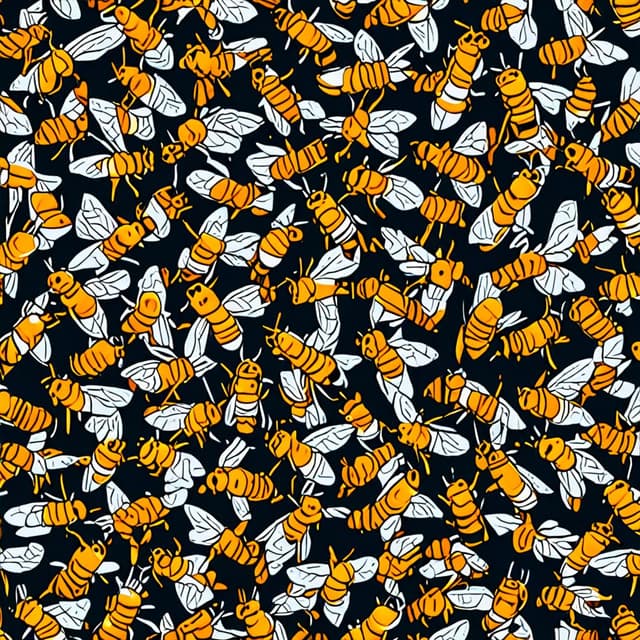
Examples of hive-like intelligence can be found in the behavior of certain social insects, birds, and mammals. Ants, bees, termites, and naked mole rats are perhaps the most well-known examples, exhibiting complex, decentralized problem-solving and information-sharing within their colonies. These "superorganisms" can accomplish feats far beyond what any individual could, such as constructing intricate nests, coordinating the division of labor, and collectively responding to environmental changes.
Neuroscientists and ethologists have studied the neurological and behavioral mechanisms underlying these hive-like systems. They've found that individual members rely on simple rules and stigmergic communication (indirect signaling through environmental cues) to generate sophisticated group-level patterns. The colony essentially functions as a "distributed brain," with no central control but rather an emergent, self-organizing intelligence.
The concept of the "hive mind" has its roots in early-to-mid 20th century philosophical and scientific speculation about "group minds" and "distributed cognition." Pioneering thinkers like Émile Durkheim, Teilhard de Chardin, and Norbert Wiener explored the idea that human societies and other collectives could develop forms of group-level intelligence transcending the individual members.
Psychologists and cyberneticists in the 1950s-60s, such as Gordon Pask, Valentin Turchin, and Francisco Varela, further developed theoretical models of "cybernetic" or "autopoietic" group minds. They posited that sufficiently complex, self-organizing systems - whether biological, technological, or social - could exhibit emergent cognitive properties not reducible to their parts.
Though often criticized as pseudoscientific, these early forays laid important groundwork for modern complexity theory, distributed AI, and other fields studying collective intelligence phenomena.
Some futurists and social theorists have speculated about the potential for human civilizations to evolve hive-like qualities. As our societies become more interconnected and information-driven, the argument goes, we may see the rise of distributed, self-organizing "global brain" dynamics.
Proponents suggest that emerging technologies like the internet, social media, and blockchain could facilitate new forms of collective decision-making, problem-solving and "group consciousness." The internet of things, smart cities, and other cyber-physical systems might also exhibit hive-like properties.
However, critics caution that hive-mind models for human societies raise serious ethical concerns around individual autonomy, privacy, and the concentration of power. There are also doubts about whether humans are truly capable of surrendering their strong sense of individualism for the benefit of the collective.
Speculative thinkers have also considered the possibility of developing artificial intelligences modeled on natural hive minds. Some AI researchers believe that imbuing machine learning systems with "swarming" or "flocking" algorithms could lead to the emergence of coherent, decentralized collective intelligence.
Potential applications range from self-organizing robotic swarms for disaster response, to "hive AIs" capable of distributed data processing and decision-making. However, the ethical challenges of ceding control to such systems remain a major concern.
Ultimately, while still largely theoretical, the concept of the "hive mind" represents an intriguing frontier in our understanding of intelligence, cooperation, and the relationship between individual and collective consciousness - in both biological and artificial systems.
